


COMUNICACIÓN
Josep Borrell Urges the Construction of a Common European Defence for Europe’s Geopolitical Survival
News

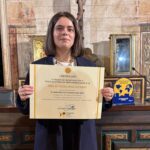
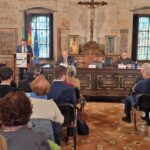
 King Felipe VI delivered the Carlos V European Award to Josep Borrell, the former High Representative of the Union for Foreign Affairs and Security Policy and former president of the European Parliament, in a solemn ceremony organised by the European and Ibero-American Academy of Yuste Foundation at the Monastery of San Jerónimo de Yuste. (09/05/2025)
During his speech, the monarch emphasised that Josep Borrell “has worked tirelessly to ensure that Europe speaks with one voice in times of enormous challenges”.
He also noted that Borrell “has been a key figure on the path towards a genuine European foreign policy and in projecting the European Union as a global actor, advocating a firmer, more coherent and unified foreign policy”.
For her part, the president of the Regional Government of Extremadura and president of the European and Ibero-American Academy of Yuste Foundation’s Board of Trustees, María Guardiola, stressed that Europe “must be a place to express oneself, to feel, to believe —and we must not give up. That is not what we are here for. Because this is a time for courage”. She went on to say that “through populism and polarisation, there are those who seek to silence anyone who thinks differently. And Europe is our refuge and our intimate defiance”.
María Guardiola, who also chairs the jury of the Carlos V European Award, described the accolade as “an act of trust in Europe and in those who, like Josep Borrell, have been able to uphold it even when it seemed on the verge of falling apart. With rigour. With intelligence. With commitment. And above all, with courage”.
Speaking of the laureate of this 18th edition, the president of the Regional Government of Extremadura highlighted that Josep Borrell “has not been a backroom politician, but one rooted in the field. He has never feared conflict, contradictions, or doubt”.
In her speech, Guardiola praised Borrell as someone who “dared to say what Europe sometimes did not want to hear” in these “turbulent times”, reminding us that “there is another way of doing politics. That one can be idealistic without being naïve”.
EUROPEAN DEFENCE
In his acceptance speech, Josep Borrell stressed that the present age “is no longer defined by peace, democracy, open trade and liberalism, but by conflict, populism, protectionism and war”.
In this sense, he argued that to face the current situation, “we will have to move from structural pacifism to solid rearmament —yet doing so at a European scale, if we want to avoid wasting resources and reviving the old national ghosts”.
Josep Borrell, the fourth Spaniard to receive this award, stated that “Europe’s geopolitical survival requires us to take responsibility for our own defence”, acknowledging that this will require reaching agreements “as we did with Schengen and as we did to save the euro”.
Borrell recalled how the bombings in Ukraine began, and defended the view that “Europe must find the financial means to support Ukraine militarily, compensating for the possible end of United States aid”, as, he argued, “without a peace that preserves Ukraine’s independence and freedom, we will not be safe in Europe”. He also referred to Gaza, which he described as “the largest operation of ethnic cleansing since the end of World War II”.
Furthermore, he warned that “Europe will not survive if it continues to be a fiscal archipelago of disparate tax policies and fragmented armies”.
Borrell described Europe as “a land of freedom, economic prosperity and social cohesion”, and stressed that “peace has a price, and if we do not pay it, European civilisation will not survive in a chaotic world”.
A FOCAL POINT FOR EUROPE
The ceremony for the Carlos V European Award, which today places Extremadura at the centre of attention across the continent, was attended by numerous high-profile figures, including Teresa Ribera, executive vice-president of the European Commission for a Clean, Just and Competitive Transition; Óscar López, minister for Digital Transformation and the Civil Service; Isabel Perelló Doménech, president of the General Council of the Judiciary and the Supreme Court of Spain; and former prime ministers Mariano Rajoy and Felipe González —the latter himself a recipient of the Carlos V Award in 2000. Also present were Javier Solana and Marcelino Oreja, who received the award in 2011 and 2017 respectively, with the latter also being a member of the European and Ibero-American Academy of Yuste, along with former president of the Regional Government of Extremadura, José Antonio Monago.
Among the Academy members who accompanied the laureate were Abram de Swaan, Ramón Jáuregui, Monica Luisa Macovei and Juan Carlos Rodríguez Ibarra. Nearly twenty diplomatic representatives from European and Ibero-American embassies also attended, including those from Germany, Austria, Belgium, Bolivia, Bulgaria, Croatia, Slovakia, France, Greece, Italy, the Netherlands, Poland, Portugal and Romania, alongside the Spanish ambassador to Portugal.
With this award, Yuste Foundation seeks to recognise individuals, organisations, projects or initiatives that have contributed to greater understanding and promotion of Europe’s cultural, social, scientific and historical values, as well as to the process of European integration and unity.
Previous recipients of the award include: Jacques Delors (1995); Wilfried Martens (1998); Felipe González (2000); Mikhail Gorbachev (2002); Jorge Sampaio (2004); Helmut Kohl (2006); Simone Veil (2008); Javier Solana (2011); José Manuel Durão Barroso (2014); Sofia Corradi (2016); Marcelino Oreja Aguirre (2017); Antonio Tajani (2018); the project “Cultural Routes of the Council of Europe” (2019); Angela Merkel (2021); the European Disability Forum (2022); António Guterres (2023); and Mario Draghi (2024).
The Carlos V European Award is so named because of the European ties of the historic leader, a native of Ghent (Belgium), with German and Spanish grandparents and parents, crowned emperor in Aachen, and who later abdicated in Brussels, thereby renouncing temporal power and retiring to the Monastery of Yuste, where he spent the final years of his life.
Carlos V European Award Research and Mobility Grants for European Studies
In connection with the Carlos V European Award, Yuste Foundation offers ten Research and Mobility Grants for European Studies aimed at researchers from across Europe who are currently working on a doctoral thesis in any discipline within the humanities or social sciences.
The Carlos V European Award Grants focus on European history, memory and integration, based on the topic chosen by the awardee for each edition, and approached from a multidisciplinary perspective.
Selected researchers become part of Yuste’s Euro-Ibero-American Alumni Network, which aims to facilitate the exchange of projects and information among researchers specialising in European studies who have been recipients of the Carlos V European Award Grants.
Yuste’s Alumni Network spans leading universities, institutions and research centres around the world. It currently includes over one hundred researchers from countries such as Germany, Belgium, Brazil, Cyprus, Cuba, Spain, France, Italy, Mexico, Peru, Portugal, the United Kingdom and Russia.
