


COMUNICACIÓN
Ten Researchers Gather in Guadalupe for the Carlos V European Award-European Disability Forum Doctoral Seminar
News


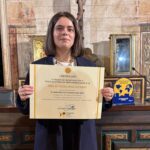
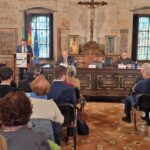
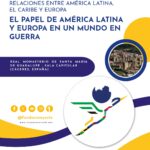
 The European and Ibero-American Academy of Yuste Foundation has organised the Carlos V European Award Doctoral Seminar of Multidisciplinary Studies on Contemporary Europe – European Disability Forum entitled “United in Diversity: The Impact of the European Union on the Lives of People with Disabilities”. The seminar will bring together ten researchers from Spain and Colombia, as well as experts from Germany, Belgium, Spain, France, and Serbia, from 16 to 18 December at the Royal Monastery of Santa María de Guadalupe in Spain. (9/12/2025)
The selected researchers are conducting their work at the Universities of Almería, Rey Juan Carlos, Valladolid, Barcelona, Castilla-La Mancha, Extremadura, Complutense University of Madrid, as well as at Christian-Albrechts-Universität Kiel (Germany) and the University of Caldas (Colombia).
The aim of this meeting is to analyse and discuss topics such as the European Union’s contribution to the inclusion and realisation of the rights of people with disabilities; the role of European institutions and bodies in developing initiatives and policies to promote, guarantee, and strengthen the rights of people with disabilities; and the role of the European disability movement in advocating for and contributing to a more inclusive Union for people with disabilities, among other issues. The papers presented will subsequently be published in the book collection “Cuadernos de Yuste”, edited by Yuste Foundation.
At the opening of the seminar, which will be presided over by the director general of External Action of the Regional Government of Extremadura, Pablo Hurtado, the president of the European Disability Forum and chair of the jury of the Grants, Ioannis Vardakastanis, will also speak. Vardakastanis received the Carlos V European Award in 2022 on behalf of the organisation.
The doctoral seminar programme is complemented by contributions from various professors and experts, including Fréderic Mertens, co-director of the Chair of Euro-Atlantic Security Culture at the European University of Valencia and member of Yuste’s Euro-Ibero-American Alumni Network; Ana Milosĕvić, researcher at the University of Leuven and member of Yuste’s Alumni Network; Rosa Martínez de Codes, full professor of American History at the Complutense University of Madrid; and Eric Bussière, Jean Monnet professor of European Integration at Sorbonne University Paris IV.
The doctoral seminar is co-directed by Jean Monnet “ad personam” professor and vice-president of the Royal European Academy of Doctors, Teresa Freixes, and by the director of Yuste Foundation, Juan Carlos Moreno.
The selected researchers will become part of Yuste’s Euro-Ibero-American Alumni Network, which aims to facilitate the exchange of projects and information among researchers specialising in European topics who have been awarded a Carlos V European Award Grant. To date, more than 130 researchers have benefited from these grants and are now based at leading universities, institutions, and research centres in countries such as Belgium, Brazil, Cyprus, Colombia, Cuba, France, Germany, Italy, Mexico, Morocco, Peru, Poland, Portugal, the United Kingdom Ukraine, Russia and Spain.
The Doctoral Seminar is organised with the collaboration of the Regional Government of Extremadura, the Provincial Councils of Cáceres and Badajoz, the Royal Monastery of Santa María de Guadalupe, and the University of Extremadura. It also forms part of the European Heritage Label, an initiative of the European Union aimed at promoting the values of democratic coexistence and intercultural dialogue.
Research and Mobility Grants for European Studies
The Carlos V European Award includes the provision of Doctoral Research and Mobility Grants for European Studies, aimed at researchers preparing a doctoral thesis on the history, memory, and European integration, focusing on the subject chosen by the award recipient in each edition and approached from a multidisciplinary perspective.
The focus of these grants is adapted in each edition to the awardee’s area of expertise, and on this occasion it is the impact of the European Union on the lives of people with disabilities.
Each grant provides individual funding of 2,500 euros, which is intended to support the study and research, mobility to conduct that research, and the preparation of contributions to be presented at the Carlos V European Award Doctoral Seminar of Multidisciplinary Studies on Contemporary Europe. It also covers the development of research papers within the framework of the call, which will later be published as a joint volume by Yuste Foundation, as well as the mobility of the researchers to carry out their work, participate in the seminar, and finally attend the presentation of the published research.
Carlos V European Award – European Disability Forum
In the 15th edition of the Carlos V European Award, the jury presented the prize to the European Disability Forum (EDF), a European NGO that brings together organisations representing 100 million people with disabilities and their families across Europe. According to the jury’s decision, at the time of receiving the award, the EDF had spent 25 years “defending the rights of people with disabilities and promoting their inclusion, caring for those who need it most and who suffer multiple discrimination for having different capacities, valuing their dignity as people and the great value they are to society. Through its work, the EDF promotes a more inclusive Europe and a more social, just and egalitarian Europe, and contributes to the process of European integration, to the values that the European Union defends and to ensuring that all citizens can live together in this common area on an equal footing and without being discriminated against because of their social capacities. It thus favours a more humane Europe that focuses on the well-being of its citizens, providing strong legal frameworks to defend inclusion, accessibility, freedom of movement, independent life, dignity, non-discrimination, active and effective participation in society, respect for difference as part of human diversity and other fundamental rights and freedoms”.
