


COMUNICACIÓN
Yuste Foundation Calls for a Fairer, More Equal and Inclusive Europe
News

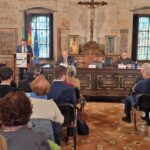
 The director general for External Action of the Regional Government of Extremadura, Pablo Hurtado, opened the Carlos V European Award– European Disability Forum Doctoral Seminar for Multidisciplinary Studies on Contemporary Europe, entitled “United in Diversity: The Impact of the European Union on the Lives of Persons with Disabilities”. The seminar is being held from today until Thursday at the Royal Monastery of Santa María de Guadalupe and is organised by the European and Ibero-American Academy of Yuste Foundation. (16/12/2025)
In his address, the director general highlighted the importance of this international meeting of experts and young researchers, describing it as an example of intergenerational and interdisciplinary collaboration which, over several days, will reflect on “the Europe we are building and the Europe we aspire to”, he said. The selected researchers are carrying out their work at the universities of Almería, Rey Juan Carlos, Valladolid, Barcelona, Castilla-La Mancha, Extremadura and the Complutense University of Madrid, as well as at the Christian Albrecht University of Kiel (Germany) and the University of Caldas (Colombia).
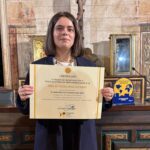
The Carlos V European Award was presented in 2022 to the European Disability Forum, an organisation representing more than one hundred million people with disabilities and their families across Europe. In this context, Hurtado recalled that, according to figures revealed by the Forum’s president, Ioannis Vardakastanis, at the award ceremony, more than 50% of people with disabilities still feel discriminated against. For this reason, Hurtado said, “we must continue researching and working towards a fairer, more equal and inclusive Europe”.
In Hurtado’s view, diversity is one of the greatest strengths, expressed through the plurality of the citizenry, the richness of our cultures and the diversity of people’s abilities. To work towards this goal, the director general highlighted the grants awarded by Yuste Foundation, as they allow young doctoral candidates from Europe and Ibero-America “to engage with the process of European integration with academic rigour and civic commitment”.
The researchers presenting their work over these days will become part of Yuste’s Euro-Ibero-American Alumni Network, a distinction that entails “acting as ambassadors for the values promoted by the Foundation, which are translated into the fostering of peace and international harmony through the promotion of culture, research, the dissemination of knowledge and social integration”.
The opening of the Doctoral Seminar also featured an address by the guardian and custodian of the Royal Monastery of Santa María de Guadalupe, friar Vidal Rodríguez, who stated that addressing human disability within the European framework, in the town of Puebla de Guadalupe, demonstrates a high degree of responsibility in the “care of the person and their dignity; a commitment to promoting the quality of life of communities and their comprehensive development”.
In the view of the guardian and custodian, the natural surroundings of the Geopark, the cultural beauty of the Monastery and the Marian devotion that has linked Extremadura with the Americas “speak to us of how worthwhile it is to embark on projects that seek the good of individuals and communities”. In closing, friar Vidal called for education as an indispensable tool for growing in humanity.
For his part, Vardakastanis explained that the title of the Doctoral Seminar reflects the work of the organisation, whose aim is for the European Union to recognise all persons with disabilities as full and equal citizens, empowered to participate in all spheres of life. He stressed that “the European project will not be complete until persons with disabilities can enjoy their rights without legal, physical, social or attitudinal barriers”.
The European Union became the first regional organisation in the world to ratify the United Nations Convention on the Rights of Persons with Disabilities, a comprehensive human rights treaty that has since shaped laws, policies, funding instruments and cross-border cooperation affecting millions of persons with disabilities. However, in the view of the president of the European Disability Forum, further progress requires “robust, independent and critical research based on the lived experience of persons with disabilities”.
Vardakastanis concluded his address by encouraging researchers to engage with organisations of persons with disabilities, both at European level and in their own countries, so that “scientific knowledge is incorporated into the advocacy efforts of the movement”.
Doctoral Seminar
The aim of this meeting is to analyse and debate issues such as the contribution of the European Union to inclusion and to the fulfilment of the rights of persons with disabilities; the role of European institutions and bodies in developing initiatives and policies designed to promote, guarantee and strengthen the rights of persons with disabilities; and the role of the European disability movement in advocating for and contributing to a more inclusive Union for persons with disabilities, among other topics. The papers presented will subsequently be published in the “Cuadernos de Yuste” series edited by Yuste Foundation.
The Doctoral Seminar programme is complemented by contributions from a range of professors and experts, including the co-director of the Chair of Euro-Atlantic Security Culture at the European University of Valencia and member of Yuste’s Euro-Ibero-American Alumni Network, Frédéric Mertens; the researcher at the University of Leuven and member of Yuste’s Alumni Network, Ana Milošević; the professor of American History at the Complutense University of Madrid, Rosa Martínez de Codes; and the Jean Monnet professor of European Integration at Sorbonne University Paris IV, Eric Bussière.
To date, more than 130 researchers have benefited from these grants and are now based at leading universities, institutions and research centres in countries including Belgium, Brazil, Colombia, Cuba, Cyprus, France, Germany, Italy, Mexico, Morocco, Peru, Poland, Portugal, Russia, Spain, the United Kingdom and Ukraine.
The Doctoral Seminar is co-directed by the Jean Monnet professor ad personam and vice-president of the Royal European Academy of Doctors, Teresa Freixes, and by the director of Yuste Foundation, Juan Carlos Moreno. It is supported by the Regional Government of Extremadura, the Provincial Council of Cáceres, the Provincial Council of Badajoz, the Royal Monastery of Santa María de Guadalupe and the University of Extremadura. In addition, it forms part of the European Heritage Label, a European Union initiative aimed at promoting the values of democratic coexistence and intercultural dialogue.
