


COMUNICACIÓN
Yuste Foundation Opens Applications for 10 European Doctoral Grants Associated with the Carlos V European Award Granted to António Guterres
News
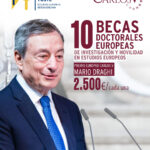


 The European and Ibero-American Academy of Yuste Foundation has opened the call for applications for 10 “Carlos V European Award – António Guterres European Doctoral Research and Mobility Grants for European Studies”, each with a financial endowment of €2,500. (11/02/2026)
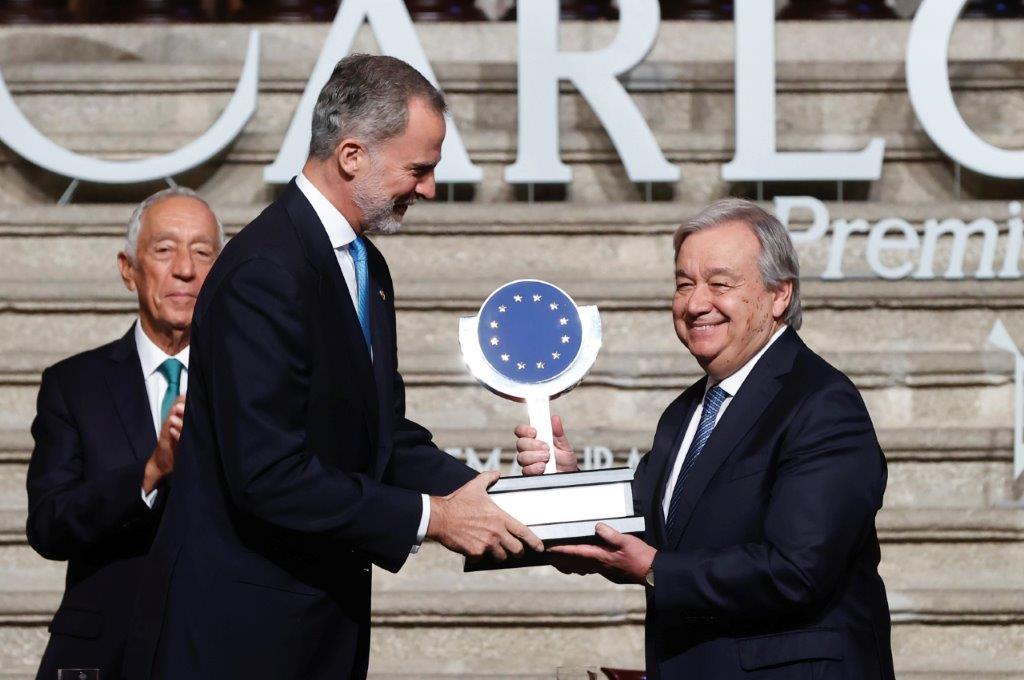
The jury of the 16th edition of the Carlos V European Award granted the prize to the secretary-general of the United Nations, António Guterres, “for his proven, extensive and long-standing life career devoted to social commitment, the process of European integration, the promotion of multilateralism and human dignity as the core of his work, addressing global challenges and crises”. According to the jury, “he has promoted actions to respond to the Covid-19 pandemic, to the war in Ukraine, to address the climate emergency and achieve ambitious reforms with which to face the challenges of the 21st century. Also noteworthy is his determination to fight against one of the greatest challenges facing Europe and humanity, climate change, promoting sustainable development and placing the 2030 Agenda as the global roadmap focused on people and the planet”.
For these reasons, the focus of this call will be on the topic: “Migration, refugees and human rights”, without prejudice to applicants proposing other innovative research lines related to the main topic. Regarding the specific priorities within the topic, applicants should consider the European Union’s contribution to managing migration flows, protecting refugees, and defending human rights.
The financial endowment will be used to support study and research, as well as mobility to carry out the research and prepare papers to be presented during the Carlos V European Award Doctoral Seminar on Multidisciplinary Studies of Contemporary Europe, which will take place at the Monastery of San Jerónimo de Yuste.
Recipients must be enrolled in a doctoral programme and in the thesis preparation phase in History, Political Science, Economics, Law, or other disciplines within the Humanities and Social Sciences, as well as other branches of science, on a topic related to the objectives and focus set out in the call. Proof of English or Spanish language proficiency at level B2 or higher of the CEFR is also required.
The deadline for applications is 25 March 2026, and the grants will be awarded through a competitive selection process.
In assessing applications, the jury will take into account, in addition to academic merits, the orientation of the proposed paper, its alignment with the call’s topic, the quality of the proposed topic, methodology, and overall structure of the work.
Applications, along with the supporting documentation, must be submitted electronically by completing the digital form available at: https://www.fundacionyuste.org/en/carlos-v-european-award-grants-2/ and sending the required documents to the following email address: becas@fundacionyuste.org
The jury will be composed of distinguished figures from the academic and university sectors with professional experience related to the European Union and the topic and priorities of this call. After evaluating the submitted applications, the jury will issue a report detailing the results.
CONTEXT
The Carlos V European Award is associated with the granting of Doctoral Research and Mobility Grants for European Studies, aimed at researchers preparing a doctoral thesis. The focus of these grants is adapted each edition to the curriculum of the awardee. Selected researchers participate in the Carlos V European Award Doctoral Seminar organised by the European and Ibero-American Academy of Yuste Foundation, and their work is published by a prestigious publishing house.
The Carlos V European Award Grants focus on European history, memory, and integration according to the topic chosen by the laureate in each edition, approached from a multidisciplinary perspective. To date, more than 100 researchers from the European Union and countries such as Russia, Morocco, Mexico, Peru, Ukraine, Colombia, Brazil, and Cuba have benefited from these grants.
