


ACTIVIDADES
MARRIAGE, EMPIRE AND DIPLOMACY: THE DYNASTIC POLICY OF THE HABSBURGS (15th–17th CENTURIES)
Monastery of San Jerónimo de Yuste, 15–17 July 2026
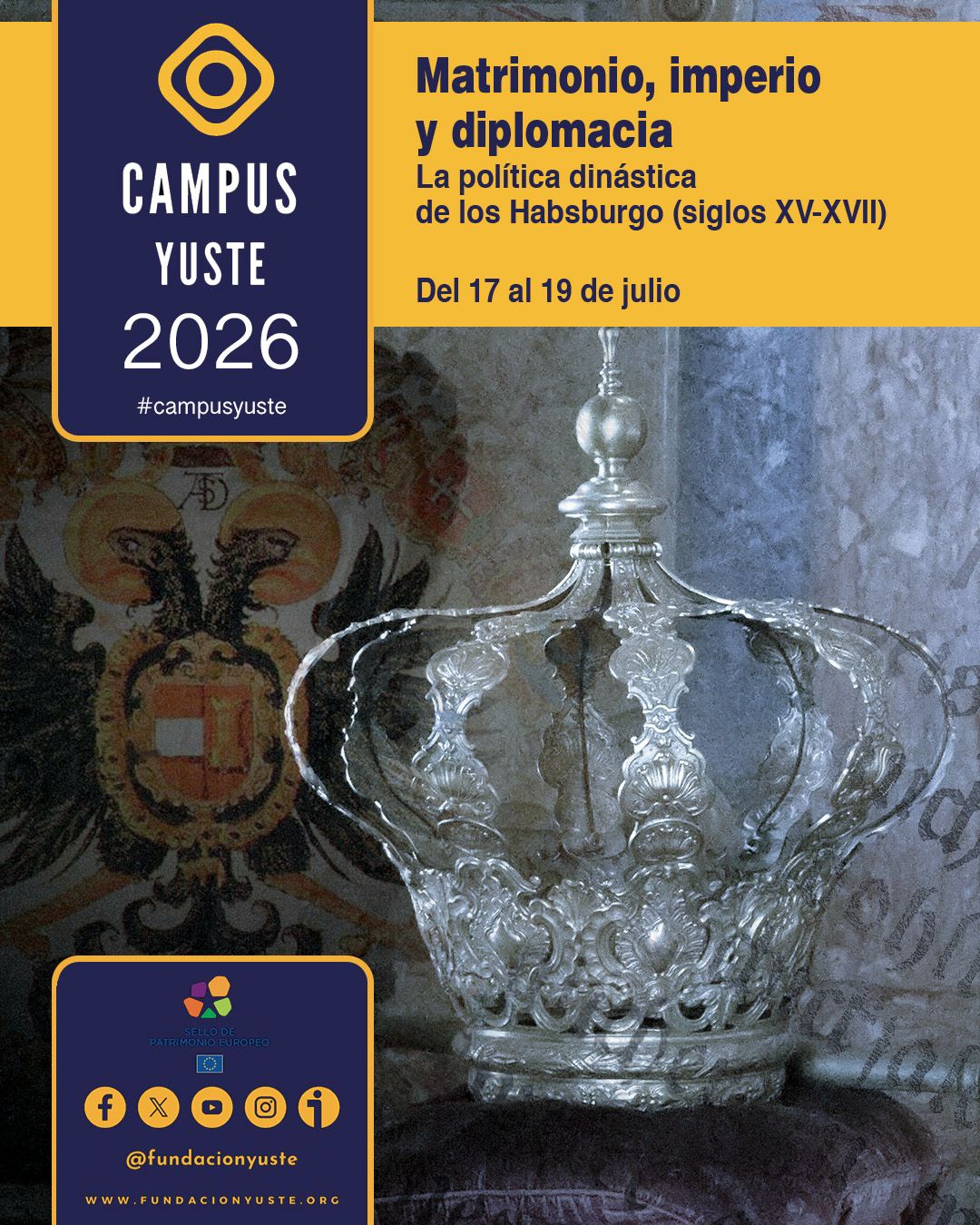
This academic programme offers an exploration of the matrimonial and diplomatic strategies that defined the power of the House of Austria between the 15th and 17th centuries. Through eight sessions and three round tables, it will examine how the Habsburgs turned marriage into a tool of governance, replacing military conquest with family alliances.
The course will address the construction of a transnational dynastic network that united the crowns of Castile, Aragon, Burgundy, Austria and Portugal, thereby consolidating Catholic hegemony in the face of the Reformation and rival powers. It will analyse the decisions of Maximilian I, Charles V and Philip II, the emblematic marriages that shaped the European political map, and the biological and symbolic limits of dynastic inbreeding.
It will also study female agency in court diplomacy, queens, infantas and regents who acted as political mediators, as well as the global projection of the Habsburg imperial model in the American viceregal sphere, where the monarchy’s familial and religious order translated into new colonial hierarchies and a process of social mestizaje, generating alliances between Creole and peninsular elites.
The programme concludes with an analysis of the literary representation of Habsburg power during the Spanish Golden Age, where imperial marriage was exalted as a symbol of divine legitimacy and authority, but also subjected to critique within Baroque culture.
Overall, this course offers a comprehensive view of the diplomacy and political culture of a dynasty that aspired to embody the ideal of universal monarchy.
Directors:
Rosa Perales Piqueres. University of Extremadura
Rosa María Martínez de Codes. Complutense University of Madrid
