


COMUNICACIÓN
More Than 130 Young People from 16 Countries Enrol in the First Campus Yuste Course Exploring the Challenges Facing the European Union
News




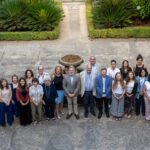
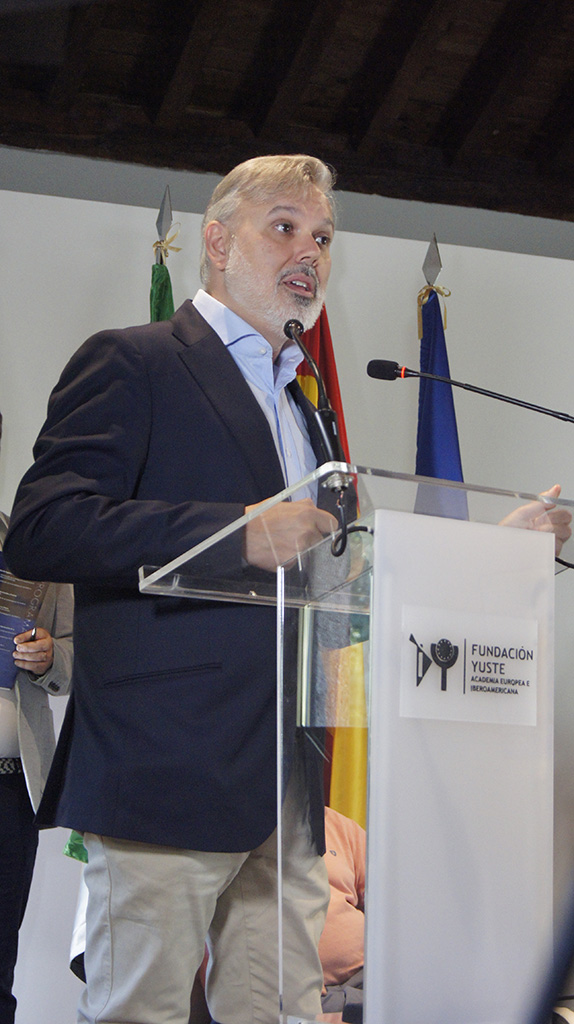
More than 130 young people from Argentina, Belgium, Brazil, Chile, Colombia, Cuba, Ecuador, El Salvador, Spain, Mauritania, Mexico, Paraguay, Peru, Portugal, the Czech Republic and Uruguay have enrolled in the summer course “The European Union’s Strategic Autonomy in the Face of the Global (Dis)Order”, which was inaugurated today at the Monastery of San Jerónimo de Yuste. Of the total number of participants, 50 are attending the course in person. (01/07/2026)
During his address, the director of Yuste Foundation, Fernando Pizarro, expressed his gratitude to the Foundation’s Board of Trustees and to the president of the Regional Government of Extremadura, María Guardiola, for the opportunity to lead this public foundation.
Pizarro also highlighted the work carried out by Yuste Foundation for more than three decades “to promote Extremadura internationally, both in Europe and Ibero-America, and to help the region recover the greatness of the era of Emperor Charles V”.
Meanwhile, Alfonso Pinilla, professor of Contemporary History at the University of Extremadura and co-director of the course, outlined the topics that will be addressed over the three-day programme.
He explained that the course will examine the relationship between the European Union’s ambitions and its capabilities; explore the values underpinning the European integration project; address the EU’s energy autonomy; analyse the relationship between Euroscepticism and the desire of other countries to join the Union; examine its complex relations with the countries of Eastern Europe; and consider the present and future of the welfare state. In addition, the programme will provide an in-depth analysis of the challenges Europe faces in achieving strategic autonomy in defence, concluding with an examination of the European Union’s relationship with China.
Jesús Conde Fuentes, deputy vice-rector for University Extension at the University of Extremadura, highlighted the importance of the International Summer/Autumn Courses, emphasising their significance for both the university community and society as a whole.
The course is directed by Alfonso Pinilla García, professor of Contemporary History at the University of Extremadura, and Jaime Rossell Granados, president of the Extremaduran Council of the European Movement (CEXME). It is organised with the collaboration of the Regional Government of Extremadura, Patrimonio Nacional, the Extremaduran Agency for International Development Cooperation, the Provincial Council of Cáceres, the Provincial Council of Badajoz, and Mafresa.
