


COMUNICACIÓN
EXTREMADURA ASSERTS EUROPEAN COHESION AS THE BASIS ON WHICH EUROPE CAN BUILD ITS COMPETITIVENESS AND SOVEREIGNTY IN A FRAGMENTED WORLD
News
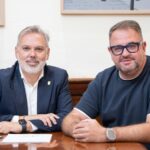
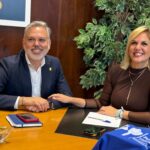
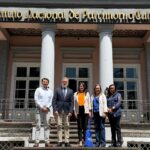

The director-general for External Action of the Regional Government of Extremadura, Pablo Hurtado, opened the Carlos V European Award – Angela Merkel Doctoral Seminar of Multidisciplinary Studies on Contemporary Europe, entitled “The Fortune of Being United: Securing and Strengthening Europe’s Cohesion”, which is taking place from today until Thursday at the Monastery of San Jerónimo de Yuste. The event is organised by the European and Ibero-American Academy of Yuste Foundation. (23/06/2025)
During his address, the director-general defended European cohesion “as the foundation upon which Europe can build its competitiveness and sovereignty in an increasingly fragmented world”.
He also highlighted the “pro-European vocation” of the eighteen researchers selected for a European research and mobility grant in multidisciplinary studies, as they share a common goal: “to reflect on Europe and to project Europe, in order to redefine Europe”, he stated.
For Hurtado, the doctoral seminar is a space for reflection and research, “for honest dialogue, bold thinking and shared knowledge”, bringing together young doctoral students from different countries and becoming a clear testimony to “unity in diversity”.
During the opening ceremony, the director of Yuste Foundation, Juan Carlos Moreno, also took the floor. He read a message sent by former chancellor and 2021 Carlos V European Award laureate Angela Merkel, in which she affirms that European cohesion remains essential in the face of international threats and crisis hotspots. In Merkel’s view, Russia’s ongoing aggression against Ukraine and the armed conflicts in the Middle East “pose unprecedented challenges that can only be tackled effectively if Europe stands united, as opportunities and advantages multiply when working together”.
In her letter, Angela Merkel highlighted the thematic diversity of the papers presented at the doctoral seminar, covering issues such as cohesion law, pandemic prevention, asylum law, climate protection and digitalisation, as a “valuable contribution because they propose common European solutions to current challenges”.
Regarding the topics of the papers to be presented, Jean Monnet Chair “ad personam” and co-director of the Doctoral Seminar, professor Teresa Freixes, stated that they examine subjects relevant to the current geopolitical context, such as freedom of movement in the process of European integration, the relationship between cohesion and the parliamentary system, the verification of democratic cohesion, the media and institutional trust, among others. Professor Freixes also stressed the international and multidisciplinary nature of the panel of experts, who come from various universities and research centres.
To conclude, professor Jürgen Elvert, Jean Monnet Chair of European History at the University of Cologne, recalled that in her acceptance speech for the Carlos V European Award, Angela Merkel expressed her wish “to build a sovereign and effective Europe capable of upholding our values in the world, for they are the foundation of our credibility and what allows us to exert real influence on other countries”.
The Doctoral Seminar brings together eighteen researchers from Cuba, Spain, Bulgaria and Malaysia, as well as experts from Germany, Belgium, Spain, France, Italy, Serbia, Belgium and Peru, who will now become part of Yuste’s Euro-Ibero-American Alumni Network. This Network aims to facilitate the exchange of projects and information among researchers specialising in European affairs who have been awarded one of the Carlos V European Award Grants. To date, more than 100 researchers have benefited from these grants, and are now working in leading universities, institutions and research centres across various countries, including Germany, Belgium, Brazil, Cyprus, Cuba, Spain, France, Italy, Mexico, Morocco, Peru, Poland, Portugal, Ukraine, the United Kingdom and Russia.
The Doctoral Seminar is supported by the Regional Government of Extremadura, the Provincial Councils of Cáceres and Badajoz, Patrimonio Nacional, the University of Extremadura, and the European Parliament Liaison Office in Spain.
